Table of Contents
Contents are generated from article headings.
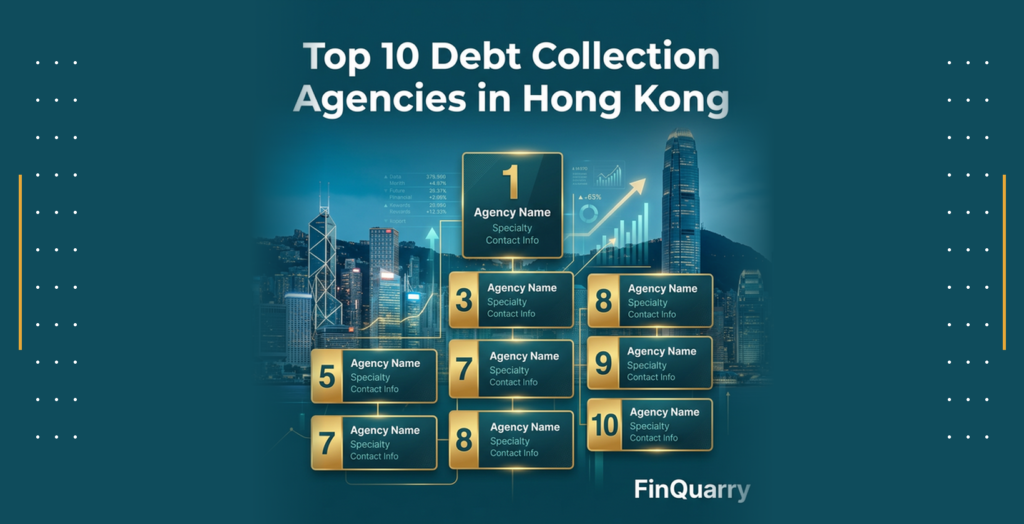
Debt collection agencies in Hong Kong recover outstanding debts on behalf of creditors through amicable negotiation, legal action, or post-judgment enforcement within a regulatory framework that prohibits harassment, protects debtor privacy, and establishes court procedures for payment enforcement. The ten agencies examined in this guide represent diverse service models: Debt Hunter (聯合信用管理有限公司), Atradius Collections, Coface Hong Kong, Cedar Financial, United Credit Management/CollectForUExpert, Receivable Management Services (RMS), Inter-Credit Collection (InterCredit), DebtFix (via Ralph International Group Ltd), Patrick Chu/Conti Wong Lawyers LLP, and Custom Solutions Limited (JC Corporate). These providers range from international networks handling cross-border commercial recovery to local specialists focusing on Hong Kong consumer debts and law firms offering integrated litigation services.
Selecting an appropriate collection agency requires evaluating service scope alignment with debt characteristics (commercial vs consumer, domestic vs cross-border), regulatory compliance with Hong Kong ordinances, fee structures (contingency vs flat rates), and specialized expertise in relevant industries or debtor segments. Success depends on factors beyond agency selection: debt age (fresh debts under six months achieve higher recovery than aged debts exceeding two years), debtor solvency and asset availability, documentation quality (written contracts outperform verbal agreements), and creditor priorities balancing recovery against relationship preservation. This guide provides systematic evaluation frameworks enabling creditors to match agency capabilities to specific portfolio needs while understanding Hong Kong’s legal collection processes, debtor protections, and enforcement mechanisms.
Scope Note: This content provides a general overview of debt collection agencies and practices in Hong Kong based on financial and legal principles applicable as of 2026. Regulations vary by case and are governed by laws such as the Money Lenders Ordinance (Cap. 163) and the Personal Data (Privacy) Ordinance; this material is for educational purposes only and does not constitute legal or financial advice.
1. Debt Hunter (聯合信用管理有限公司)
Debt Hunter operates as a Hong Kong-registered debt collection firm offering professional recovery services across consumer and commercial debt categories. The agency emphasizes compliance with Hong Kong regulations governing debt collection practices, including adherence to Money Lenders Ordinance provisions prohibiting harassment and Personal Data (Privacy) Ordinance restrictions on unauthorized disclosure of debtor information.
Services offered by Debt Hunter typically include pre-legal amicable collection through demand letters and debtor contact, negotiation of payment plans or settlement agreements, and coordination with legal counsel for court proceedings when amicable resolution fails. The agency operates on contingency fee structures where collection fees apply only when debts are successfully recovered, aligning agency incentives with creditor outcomes and eliminating upfront costs for clients.
Debt Hunter’s approach tends to emphasize local market knowledge and Cantonese language capabilities that facilitate communication with Hong Kong debtors across diverse demographic groups. Cultural sensitivity in collection communications may reduce debtor defensiveness and improve negotiation outcomes compared to standardized international collection scripts that ignore local norms around face-saving and family involvement in financial matters.
Creditors considering Debt Hunter should verify current licensing status, review service agreements carefully for fee calculation methods and termination provisions, and clarify whether the agency maintains professional indemnity insurance covering potential liability for collection practice violations. Understanding these operational details helps creditors assess whether the agency’s capabilities align with specific debt portfolio characteristics and recovery objectives.
2. Atradius Collections
Atradius Collections operates as the receivables management division of Atradius Group, providing international debt collection services with capabilities spanning multiple jurisdictions including Hong Kong. The agency focuses primarily on business-to-business (B2B) commercial debt recovery, leveraging global partnerships to pursue cross-border claims where debtors operate or hold assets outside Hong Kong.
The firm’s service model typically encompasses amicable collection attempts through debtor contact and negotiation, legal collection through court proceedings and judgment enforcement, and receivables management consulting advising creditors on credit policy optimization and collection process improvements. Atradius Collections emphasizes compliance with international debt collection standards and local regulatory requirements in each jurisdiction where it operates.
Cross-border recovery expertise represents a key differentiator for Atradius Collections, addressing challenges creditors face when Hong Kong-based companies owe debts to overseas suppliers or when foreign debtors hold assets beyond Hong Kong courts’ direct jurisdiction. The agency’s international network enables coordination of collection efforts across multiple countries, navigating varying legal frameworks, language barriers, and enforcement mechanisms that complicate independent cross-border recovery attempts.
Creditors with substantial international trade receivables may benefit from Atradius Collections’ global reach, particularly when debtor locations span regions where the agency maintains established partnerships. However, creditors should clarify jurisdictional coverage for specific countries, understand fee structures for multi-jurisdiction cases, and confirm whether the agency coordinates with Hong Kong legal counsel for domestic enforcement components of cross-border claims.
3. Coface Hong Kong
Coface Hong Kong operates as part of Coface Group, a global credit insurance and debt recovery provider serving businesses with trade receivables management needs. The organization combines credit insurance products protecting against customer payment defaults with debt collection services pursuing recovery of insured and uninsured receivables.
Services encompass trade credit risk assessment, receivables monitoring, and debt recovery across amicable and legal collection stages. Coface’s integrated approach allows clients to transition seamlessly from credit insurance claims to collection efforts, leveraging the organization’s debtor intelligence and relationship history to inform recovery strategies.
Coface Hong Kong’s positioning in trade credit and receivables management attracts businesses requiring comprehensive credit risk solutions rather than standalone collection services. Companies operating in industries with extended payment terms, high-value transactions, or international customer bases may find value in Coface’s bundled credit insurance and collection capabilities.
Creditors evaluating Coface should assess whether credit insurance integration provides sufficient value to justify potentially higher costs compared to specialized collection agencies offering only recovery services. Understanding the division between insured claim recoveries and uninsured debt collections helps clarify service scope and fee structures applicable to specific debt portfolios.
4. Cedar Financial
Cedar Financial operates as an international debt recovery agency with capabilities spanning over 150 countries, including Hong Kong. The firm emphasizes culture-aware and law-compliant collection approaches tailored to local business practices, legal frameworks, and communication norms in each jurisdiction.
The agency’s service model covers commercial and consumer debt recovery through pre-legal negotiation, legal proceedings coordination, and post-judgment enforcement support. Cedar Financial positions itself as a global partner for businesses with international customer bases, providing centralized receivables management across multiple countries through a single agency relationship.
International compliance awareness and multilingual capabilities distinguish Cedar Financial from purely domestic collection agencies, addressing challenges businesses face when pursuing debts in unfamiliar legal environments. The agency’s experience navigating cross-border collection complexities may reduce creditors’ administrative burden and legal risk compared to managing multiple local collection relationships independently.
Creditors with geographically diverse receivables portfolios should evaluate Cedar Financial’s specific capabilities in priority markets, confirm whether the agency maintains direct operations or relies on local partners in Hong Kong, and clarify communication protocols ensuring timely updates on collection progress across multiple jurisdictions.
5. United Credit Management / CollectForUExpert
United Credit Management, operating under the CollectForUExpert brand, functions as a local Hong Kong debt collection provider emphasizing regulatory compliance and professional collection practices. The agency offers services across consumer and commercial debt categories, focusing on Hong Kong domestic receivables rather than international cross-border claims.
Services typically include pre-legal amicable collection through debtor contact and negotiation, legal collection coordination with Hong Kong law firms for court proceedings, and receivables consulting advising clients on credit policy and collection process optimization. The agency promotes No Cure No Pay contingency fee structures reducing creditor upfront costs and financial risk.
Local market focus and compliance emphasis position United Credit Management as an option for creditors prioritizing Hong Kong regulatory adherence and cultural sensitivity over international reach. The agency’s understanding of Hong Kong business practices, debtor communication preferences, and legal procedures may enhance recovery outcomes for domestic debt portfolios.
Creditors considering United Credit Management should verify current compliance status with Hong Kong regulations, review service agreements for fee structures and dispute resolution provisions, and clarify the agency’s capabilities for different debt types such as corporate receivables versus individual consumer debts.
6. Receivable Management Services (RMS)
Receivable Management Services operates as a Hong Kong-based provider offering debt collection consulting and receivables management solutions. The firm emphasizes advisory services helping businesses optimize credit policies, collection processes, and bad debt management strategies alongside traditional debt recovery services.
Services encompass receivables analysis identifying collection bottlenecks and process inefficiencies, collection strategy development tailored to specific debt portfolios and business objectives, and operational collection support including debtor contact, negotiation, and legal coordination. RMS positions itself as a strategic partner rather than transactional collection vendor.
Consulting orientation and receivables management expertise differentiate RMS from agencies offering only tactical debt collection execution. Businesses seeking to improve internal collection capabilities while outsourcing overflow or difficult accounts may find value in RMS’s advisory approach.
Creditors evaluating RMS should assess whether consulting services address genuine operational needs or represent unnecessary costs beyond core collection requirements, clarify the division between consulting fees and collection success fees, and confirm whether the agency maintains capabilities for full-service legal enforcement or relies on external law firm partnerships.
7. Inter-Credit Collection (InterCredit)
Inter-Credit Collection operates in Hong Kong’s debt recovery market offering customized collection solutions and account management services. The agency emphasizes flexible service models accommodating varying creditor requirements, debt portfolio characteristics, and recovery strategy preferences.
Services typically include tailored collection approaches adapting communication tactics and escalation timelines to specific debtor segments, account management providing regular progress updates and strategic recommendations, and network support leveraging partnerships for specialized collection needs or cross-border components. InterCredit’s experience spans both commercial and consumer debt categories.
Customization capabilities and adaptive collection strategies appeal to creditors with diverse debt portfolios requiring segmented approaches rather than standardized collection processes. Businesses managing receivables across multiple customer types, debt ages, or relationship priorities may benefit from InterCredit’s flexible service model.
Creditors considering InterCredit should clarify how customization affects fee structures and timelines, confirm whether network partnerships extend service capabilities or introduce coordination complexity, and evaluate whether the agency’s technology infrastructure supports efficient account management and reporting for larger debt portfolios.
8. DebtFix (via Ralph International Group Ltd)
DebtFix operates through Ralph International Group Limited, functioning as an active debt recovery agency in Hong Kong. The service emphasizes contingency-based pricing models reducing creditor financial risk and aligning agency incentives with successful debt recovery outcomes.
The agency’s operational model typically encompasses pre-legal collection through debtor engagement and negotiation, legal collection coordination for court proceedings when amicable resolution fails, and compliance with Hong Kong regulatory requirements governing debt collection practices. DebtFix positions itself as accessible to small and medium-sized businesses seeking professional collection services without substantial upfront investments.
Contingency fee structures and focus on measurable recovery outcomes attract cost-conscious creditors prioritizing performance-based relationships over fixed-fee arrangements. Businesses with limited collection budgets or uncertain recovery prospects may find contingency models reduce financial exposure while maintaining access to professional collection capabilities.
Creditors evaluating DebtFix should review service agreements for fee calculation methodologies, understand exclusions or limitations on contingency arrangements, and clarify whether the agency maintains capabilities across both amicable and legal collection stages or partners with external legal counsel for litigation components.
9. Patrick Chu / Conti Wong Lawyers LLP
Patrick Chu and Conti Wong Lawyers LLP operate as a Hong Kong law firm providing debt enforcement and legal collection services. The firm’s legal expertise enables direct handling of court proceedings, judgment enforcement, and regulatory compliance matters without requiring coordination with external legal counsel.
Services encompass legal strategy development for debt recovery litigation, court representation through Small Claims Tribunal, District Court, or High Court proceedings depending on claim value, and post-judgment enforcement through mechanisms such as garnishee orders, charging orders, bankruptcy petitions, or winding-up petitions. The firm’s legal foundation supports complex debt disputes involving contractual interpretation, fraud allegations, or cross-border enforcement challenges.
Law firm structure and litigation capabilities differentiate Patrick Chu / Conti Wong from non-legal collection agencies, providing advantages when legal action appears necessary from the outset or when debt disputes involve sophisticated legal issues requiring counsel expertise. Creditors facing defended claims, debtor counterclaims, or enforcement obstacles may benefit from engaging legal specialists rather than traditional collection agencies that coordinate with external lawyers.
Creditors considering law firm collection services should understand fee structures for legal services, which may differ from collection agency contingency models, clarify whether the firm handles both amicable pre-legal collection and litigation or focuses exclusively on legal enforcement, and assess whether legal costs justify potential recovery amounts for specific debt portfolios.
10. Custom Solutions Limited (JC Corporate)
Custom Solutions Limited, operating as JC Corporate, functions as a Hong Kong law firm offering legal debt enforcement and corporate collection services. The firm specializes in business-to-business debt recovery, leveraging legal expertise to navigate commercial disputes and complex enforcement scenarios.
Services typically include legal debt collection through court proceedings and judgment enforcement, corporate insolvency proceedings such as winding-up petitions for insolvent debtor companies, and specialized recovery strategies for secured creditors, shareholders, or other stakeholders with legal claims against corporate debtors. The firm’s corporate law background supports debt recovery integrated with broader commercial dispute resolution or restructuring objectives.
Corporate specialization and legal enforcement focus position Custom Solutions for creditors dealing with business debts involving corporate debtors, particularly when insolvency risks or complex corporate structures complicate standard collection approaches. Companies owed substantial commercial debts by corporate entities may find law firm expertise valuable for navigating Hong Kong’s corporate insolvency and enforcement frameworks.
Creditors evaluating Custom Solutions should assess whether corporate specialization aligns with debt portfolio characteristics, understand legal fee structures and cost-benefit considerations for different debt amounts, and clarify the firm’s approach to preserving business relationships when ongoing commercial ties with debtors require balancing aggressive legal tactics against relationship maintenance.
Understanding Debt Collection in Hong Kong
Debt collection in Hong Kong operates within a regulatory framework balancing creditor recovery rights against debtor protections, establishing procedural requirements for collection practices, and providing legal mechanisms for enforcing payment obligations. Understanding this framework helps creditors select appropriate collection strategies, avoid regulatory violations, and assess realistic recovery prospects based on debt characteristics and debtor circumstances.
What is Debt Collection?
Debt collection is the process of pursuing payment of outstanding financial obligations owed by debtors to creditors, employing communication, negotiation, legal action, or post-judgment enforcement to recover amounts due. Collection activities range from informal payment reminders and voluntary settlement negotiations to formal legal proceedings resulting in court judgments and compulsory asset seizure.
Amicable recovery emphasizes voluntary debtor cooperation through communication strategies designed to secure payment commitments, negotiate affordable payment plans, or reach reduced settlement amounts acceptable to both parties. This approach prioritizes relationship preservation, cost minimization, and rapid resolution over adversarial legal proceedings. Amicable tactics include demand letters explaining debt details and payment expectations, phone calls or in-person meetings discussing debtor circumstances and repayment capacity, and negotiated settlements offering payment flexibility such as installment plans or partial debt forgiveness in exchange for immediate payment.
Legal enforcement involves court proceedings establishing legally binding payment obligations through judgments, followed by enforcement mechanisms compelling payment through asset seizure, income garnishment, or insolvency proceedings. This approach applies when amicable negotiation fails, debtor cooperation is absent, or debt amounts justify legal costs and procedural timelines. Legal collection progresses through filing claims with appropriate courts, obtaining default or contested judgments after hearings, and executing judgments through bailiff asset seizure, garnishee orders freezing bank accounts or intercepting salaries, charging orders securing debts against property, or bankruptcy/winding-up petitions forcing debtor insolvency.
Legal Framework Governing Debt Collection
The Money Lenders Ordinance (Cap. 163) regulates lending practices and prohibits collection tactics constituting harassment, protecting debtors from abusive or illegal collection behaviors. Section 24 specifically prohibits debt collectors from using threats, violence, false representations, or causing annoyance to debtors or third parties when attempting to collect debts on behalf of licensed money lenders. Violations may result in criminal prosecution, fines up to HK$500,000, and imprisonment up to two years.
Harassment under the Money Lenders Ordinance includes specific prohibited acts: threatening violence or damage to persons or property, using language causing alarm or distress, falsely representing legal authority or consequences, contacting debtors at unreasonable hours persistently despite objections, or contacting third parties such as employers, family members, or neighbors to pressure payment through public embarrassment. Debtors experiencing harassment can file complaints with Hong Kong Police for criminal investigation and potential prosecution of violators.
The Personal Data (Privacy) Ordinance (PDPO) restricts how debt collectors may collect, use, and disclose debtor personal information, protecting privacy while enabling legitimate collection activities. Data Protection Principle 3 prohibits using personal data for purposes beyond the original collection purpose without debtor consent, restricting disclosure of debt details to unauthorized third parties including family members, employers, or public forums.
PDPO violations in debt collection contexts commonly involve: contacting debtors’ employers to disclose debt information without legitimate business necessity or consent, sharing debt details with family members or neighbors to create social pressure for payment, posting debtor information on public websites or social media, or selling debtor contact lists to third parties without authorization. Debtors may lodge complaints with the Privacy Commissioner for Personal Data, who can issue enforcement notices requiring corrective action, impose conditions on data handling practices, or prosecute serious breaches in court.
High Court and District Court procedures govern civil litigation for debt recovery, establishing jurisdictional thresholds, procedural requirements, and enforcement mechanisms. The Small Claims Tribunal handles debt claims up to HK$75,000 through simplified procedures designed for self-represented parties, with filing fees ranging from HK$95 to HK$445 depending on claim value. District Court jurisdiction covers claims exceeding HK$75,000 up to HK$3 million, while High Court handles claims exceeding HK$3 million or cases involving complex legal issues regardless of amount.
Types of Debt Collection Services
Pre-legal collection focuses on amicable resolution through communication and negotiation without court involvement, typically spanning 30-90 days before legal escalation consideration. Activities include demand letters formally notifying debtors of outstanding obligations and payment expectations, telephone contact exploring debtor circumstances and repayment willingness, in-person meetings negotiating payment plans or settlement terms, and skip tracing locating debtors who have moved or changed contact information.
Pre-legal collection succeeds when debtors possess repayment capacity and willingness but require payment structure flexibility, face temporary cash flow constraints resolvable through installment arrangements, or respond to creditor contact demonstrating seriousness about recovery. This stage typically recovers 40-60% of attempted debts at costs substantially lower than legal proceedings, making it the preferred initial strategy for most debt portfolios.
Legal collection involves court proceedings obtaining enforceable judgments against debtors, followed by post-judgment enforcement compelling payment through various mechanisms. The process includes filing claims with appropriate courts based on debt amount and complexity, serving claim documents on debtors notifying them of legal action and hearing dates, attending hearings where judges evaluate evidence and issue judgments, and executing judgments through bailiff seizures, garnishee orders, or insolvency petitions.
Legal collection timelines in Hong Kong generally span 6-18 months from claim filing to judgment enforcement, with variation depending on court jurisdiction, case complexity, debtor defenses, and enforcement method effectiveness. Costs include court filing fees, legal representation fees for represented parties, and enforcement expenses such as bailiff charges or bankruptcy petition advertising fees. Legal action tends to be cost-effective for debts exceeding HK$50,000-HK$100,000 where amicable resolution has failed and debtors possess attachable assets or income.
Contingency fee structures charge collection fees only when debts are successfully recovered, with fees calculated as percentages of recovered amounts rather than fixed fees regardless of outcome. This model aligns agency incentives with creditor recovery objectives, reduces upfront costs and financial risk for creditors, and makes professional collection accessible to businesses with limited budgets. Typical contingency rates in Hong Kong range from 15-35% of recovered amounts, varying based on debt age, amount, complexity, and required collection stage (pre-legal versus legal).
Flat fee structures charge predetermined amounts for specific collection services regardless of recovery success, providing cost certainty but transferring recovery risk entirely to creditors. Flat fees typically apply to initial collection stages such as demand letter preparation, debtor contact attempts, or basic legal proceedings, while contingency components may apply to successful recoveries exceeding defined thresholds.
Cross-border recovery services pursue debts where debtors, assets, or contractual obligations span multiple jurisdictions beyond Hong Kong. Challenges include navigating varying legal frameworks and enforcement procedures across jurisdictions, coordinating collection efforts with foreign partners or counsel, overcoming language and cultural barriers complicating debtor communication, and enforcing Hong Kong court judgments in foreign jurisdictions requiring reciprocal recognition arrangements. Cross-border specialists maintain international networks enabling pursuit of debtors in multiple countries, experience with treaty-based judgment enforcement mechanisms, and multilingual capabilities facilitating communication across diverse markets.
How to Choose the Right Debt Collection Agency
Selecting an appropriate debt collection agency requires evaluating multiple factors affecting recovery likelihood, cost efficiency, legal compliance, and alignment with broader business objectives beyond immediate debt recovery. Systematic evaluation reduces the risk of engaging unsuitable agencies that deliver poor results, violate regulations, or damage creditor reputations through inappropriate collection tactics.
Key Factors to Consider
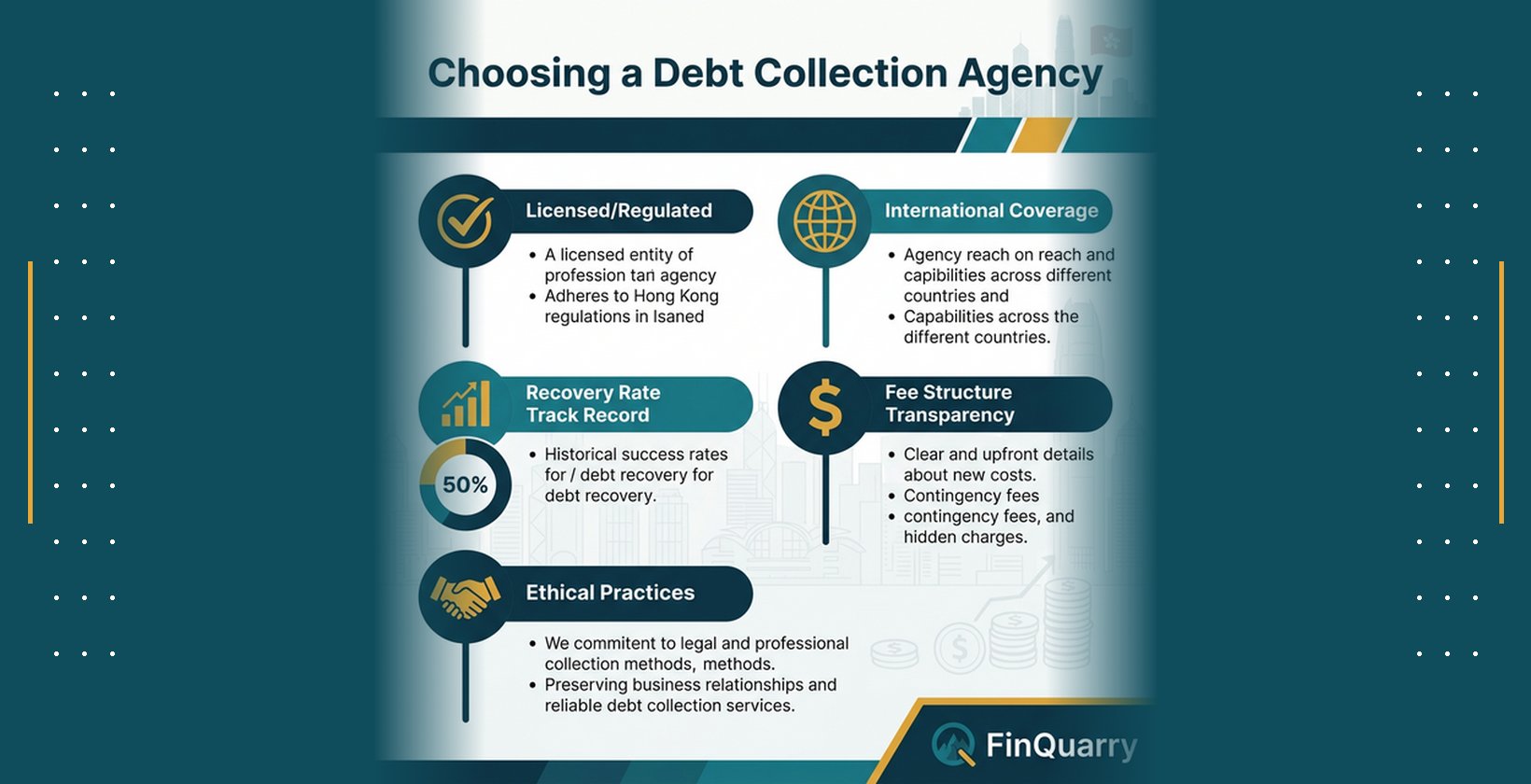
Licensing and local compliance verification confirms agencies operate legally within Hong Kong’s regulatory framework and maintain professional standards reducing creditor liability risk. While not all collection agencies require licensing as money lenders unless they also provide lending services, agencies should demonstrate compliance with Money Lenders Ordinance harassment prohibitions, PDPO data protection requirements, and general commercial conduct standards.
Membership in the Hong Kong Credit & Collection Management Association (HKCCMA) signals adherence to industry professional codes and access to ongoing regulatory training and peer oversight. HKCCMA members commit to ethical collection practices, continuing education on legal developments, and internal complaint resolution processes addressing client or debtor grievances. Creditors can verify membership status through HKCCMA’s published member directory.
Industry experience and track record provide indicators of agency capability, though specific success rates require careful interpretation due to portfolio mix variations affecting recovery difficulty. Agencies with extensive experience in creditors’ specific industries, debt types, or debtor segments tend to achieve better outcomes through accumulated knowledge of effective tactics, common debtor objections, and industry-specific settlement norms.
Service range evaluation assesses whether agencies provide required capabilities across pre-legal and legal collection stages, handle both consumer and commercial debts, and offer specialized services such as cross-border recovery, mediation, or receivables consulting. Agencies offering comprehensive services reduce creditor coordination burden by managing entire collection lifecycles, while specialists focusing on specific collection stages or debt types may deliver superior performance in narrow niches.
Fee structure analysis compares contingency percentages, flat fee amounts, and hybrid models combining both approaches, evaluating total cost implications across different recovery scenarios. Contingency-only models minimize upfront costs but may result in higher total fees for easily recovered debts, while flat fees provide cost certainty but increase losses when recoveries fail. Creditors should calculate break-even points where different fee structures produce equivalent costs, use those thresholds to evaluate which models suit specific debt portfolios, and negotiate fee terms reflecting debt characteristics such as age, amount, and documentation quality.
Technology and reporting tools affect creditor visibility into collection progress, account management efficiency, and ability to track performance metrics informing future collection strategy. Modern agencies offer online portals providing real-time account status, automated progress updates, and downloadable reports showing recovery rates, aging analysis, and cost efficiency. Legacy agencies relying on manual reporting through periodic phone calls or emailed spreadsheets increase creditor administrative burden and reduce transparency.
Red Flags to Avoid
Unlicensed agencies lacking legitimate business registration, professional association membership, or verifiable operational history pose heightened risks of poor performance, regulatory violations, or fraudulent conduct. Creditors should verify agencies maintain current Companies Registry registration in Hong Kong, provide physical office addresses rather than only virtual offices or post boxes, and demonstrate traceable ownership and management rather than anonymous operations.
Harassment-prone or illegal tactics violate Hong Kong laws and expose creditors to reputational damage, legal liability, and debtor complaints derailing collection efforts. Warning signs include agencies refusing to disclose collection methodologies or communication scripts, lacking formal complaint handling procedures for debtor grievances, or promoting aggressive tactics such as contacting debtors’ employers, family members, or posting public notices without legal authorization.
Hidden fees beyond disclosed contingency percentages or flat fees may include administrative charges, communication costs, skip tracing fees, credit report expenses, or legal proceeding fees not clearly specified in service agreements. Creditors should request comprehensive fee schedules itemizing all potential charges, clarify whether quoted fees include ancillary costs or apply only to base collection services, and negotiate fee caps limiting total costs regardless of services rendered.
Comparison Framework: Evaluating Collection Agencies
| Evaluation Criteria | Why It Matters | How to Assess |
| Regulatory Compliance | Reduces creditor liability for collection violations | Verify Companies Registry registration, HKCCMA membership, absence of enforcement actions |
| Service Scope | Ensures agency capabilities match debt portfolio needs | Confirm coverage of pre-legal and legal stages, consumer/commercial specialization, cross-border capabilities |
| Fee Structure | Affects total recovery cost and financial risk distribution | Compare contingency rates, flat fees, hybrid models across agencies; calculate scenarios |
| Industry Experience | Improves recovery through specialized knowledge | Request client references from similar industries; assess tenure in Hong Kong market |
| Communication & Reporting | Enables creditor oversight and strategic adjustment | Evaluate portal functionality, update frequency, report customization options |
| Language Capabilities | Facilitates debtor engagement across linguistic groups | Confirm Cantonese, English, Mandarin capabilities; assess written communication quality |
| Cultural Sensitivity | Preserves relationships while pursuing recovery | Discuss approaches to face-saving, family involvement, negotiation styles |
| Complaint Handling | Indicates professionalism and accountability | Review written complaint procedures; check for regulatory complaints or sanctions |
Detailed Comparison of Agency Categories
Hong Kong debt collection agencies fall into three primary categories based on service focus, capabilities, and organizational structure: international networks, local specialists, and law firms. Understanding these categories helps creditors match agency selection to specific debt portfolio characteristics and recovery objectives.
International Networks
International collection agencies maintain global operations with local capabilities in Hong Kong through direct offices or partner networks. These organizations typically focus on cross-border commercial debt recovery for businesses with international customer bases, leveraging partnerships spanning multiple jurisdictions to pursue debtors holding assets outside Hong Kong.
Service strengths include multilingual debtor communication across diverse markets, expertise navigating varying legal frameworks and cultural norms internationally, established relationships with foreign counsel enabling coordinated legal action, and centralized account management reducing creditor coordination burden. International networks suit creditors with geographically dispersed receivables portfolios requiring consistent collection approaches across markets.
Limitations may include higher fees reflecting global infrastructure costs, potentially slower local responsiveness compared to Hong Kong-focused specialists, and coordination challenges when time zones, language barriers, or procedural differences complicate cross-border collection. Creditors should evaluate whether international capabilities justify additional costs for specific debt portfolios or whether domestic collection needs dominate requiring local specialist expertise.
Local Hong Kong Specialists
Local collection agencies focus exclusively or primarily on Hong Kong domestic debt recovery, emphasizing cultural knowledge, regulatory compliance, and relationship networks within Hong Kong business and legal communities. These organizations typically serve both commercial and consumer debt markets, adapting collection approaches to specific debtor segments and creditor relationship priorities.
Service strengths include deep understanding of Hong Kong business practices and debtor psychology, Cantonese language fluency and cultural sensitivity enhancing debtor engagement, established relationships with local courts, bailiffs, and legal counsel facilitating efficient legal proceedings, and competitive fee structures reflecting lower overhead compared to international networks. Local specialists suit creditors with Hong Kong-concentrated debt portfolios requiring nuanced understanding of local market dynamics.
Limitations may include restricted capabilities for cross-border components of debts involving foreign debtors or assets, potential capacity constraints during peak collection periods affecting responsiveness, and varying technology sophistication compared to larger international agencies with advanced reporting platforms. Creditors should assess whether agencies maintain sufficient scale and resources to handle portfolio volumes effectively while preserving personal service quality.
Law Firms Offering Debt Collection
Law firms specializing in debt collection provide integrated legal services spanning amicable negotiation, court proceedings, and post-judgment enforcement without requiring coordination with external legal counsel. These organizations emphasize legal strategy, complex dispute resolution, and sophisticated enforcement mechanisms suited to high-value or legally complex debt situations.
Service strengths include direct access to legal expertise for contractual interpretation, fraud investigation, or defense against debtor counterclaims, in-house litigation capabilities reducing coordination delays and information loss between collection and legal stages, advanced enforcement strategies such as insolvency proceedings or cross-border judgment recognition, and professional indemnity insurance covering liability for legal advice and representation. Law firms suit creditors facing disputed claims, high-value debts justifying legal cost investments, or enforcement challenges requiring specialized legal knowledge.
Limitations may include higher fee structures reflecting legal professional costs rather than collection agency economics, potential focus on legal proceedings over amicable negotiation that might resolve matters more quickly and cheaply, and limited capacity for high-volume, low-value consumer debt portfolios where legal involvement is cost-prohibitive. Creditors should evaluate whether legal complexity and debt amounts justify law firm engagement versus traditional collection agencies coordinating with external counsel when legal action becomes necessary.
Debt Collection Process in Hong Kong
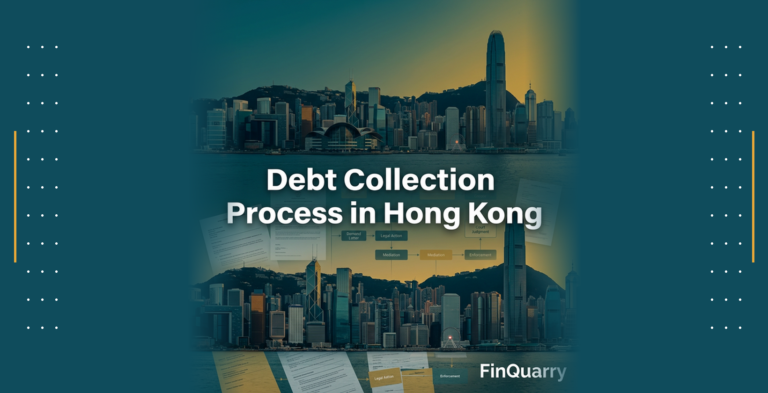
The debt collection process in Hong Kong follows a structured escalation path, moving from informal communication to formal legal enforcement if payment is not secured. It typically begins with pre-collection contact, where creditors verify debt details and seek voluntary payment through reminders or flexible arrangements. If unresolved, formal demand letters are issued by agencies or lawyers, clearly outlining the debt, deadlines, and potential consequences. When debtors engage, negotiation and settlement may follow, involving installment plans or discounted lump-sum settlements to avoid litigation. If amicable efforts fail, creditors may initiate legal action through the Small Claims Tribunal, District Court, or High Court, depending on claim size, followed by enforcement measures such as garnishee orders or asset seizure. Finally, post-collection reporting and monitoring track recovery rates, costs, and compliance, helping creditors refine future collection strategies and manage credit risk effectively.
Link to this sections to deta colections details page
Fees, Contracts, and Risk Management
Collection service agreements establish legal relationships between creditors and agencies, defining rights, obligations, fee structures, and dispute resolution mechanisms. Careful contract review protects creditor interests, prevents misunderstandings, and establishes clear performance expectations before collection activities commence.
Standard contract clauses typically include scope of services definitions specifying collection stages covered (pre-legal only, legal coordination, full enforcement), agency authority clarifying actions agencies may take without prior creditor approval versus requiring consultation, fee structures detailing contingency percentages, flat fees, expense reimbursements, and payment timing, termination provisions allowing either party to end relationships with specified notice periods and consequences, liability limitations restricting agency responsibility for debtor complaints, collection failures, or third-party claims, and confidentiality obligations protecting creditor customer data and proprietary information.
Risk mitigation strategies reduce creditor exposure to collection failures, regulatory violations, or reputational damage. Approaches include portfolio diversification across multiple agencies preventing over-reliance on single providers, performance monitoring through regular metric reviews identifying underperformance promptly, compliance verification requesting periodic confirmations of regulatory adherence and complaint histories, and contract provisions requiring agencies to indemnify creditors against liability for agency collection violations.
No-cure-no-pay contingency models reduce upfront cost risk by deferring agency compensation until successful recovery, making professional collection accessible to businesses with limited budgets or uncertain recovery prospects. Advantages include eliminated upfront costs regardless of recovery success, aligned incentives where agencies prioritize recoverable debts, and reduced financial risk for creditors attempting recovery on marginal debt portfolios. Disadvantages include potentially higher total fees on easily recovered debts where flat fees might have been cheaper, agency cherry-picking of obviously collectable accounts while avoiding difficult cases, and reduced agency motivation to pursue debts with marginal recovery prospects.
Upfront fee advantages include cost certainty enabling accurate budgeting regardless of recovery outcomes, agency willingness to attempt difficult collections regardless of success likelihood, and potentially lower total costs on high-recovery-rate portfolios. Disadvantages include financial risk of paying fees without recovery, higher aggregate costs when attempting large volumes of low-value debts, and reduced agency accountability for performance when compensation occurs regardless of results.
FAQs About Debt Collection in Hong Kong
What is the average success rate of debt collection agencies?
Debt collection success rates in Hong Kong typically range from 60-87% of attempted debts, though rates vary significantly based on debt age, amount, debtor solvency, documentation quality, and collection stage. Fresh debts under six months old generally achieve recovery rates of 70-85% through pre-legal amicable collection, while aged debts exceeding two years recover at 30-50% rates due to deteriorating debtor circumstances and increased dispute likelihood.
Factors affecting success rates include debt documentation quality, where written contracts and signed acknowledgments withstand disputes better than verbal agreements, debtor financial capacity determined by employment status, asset ownership, and existing debt burdens, relationship history between creditors and debtors influencing cooperation willingness, and collection timing where early intervention prevents debtor insolvency or asset dissipation. Agencies serving primarily commercial B2B clients may report higher success rates than consumer debt specialists due to stronger documentation and debtor business incentives to preserve commercial relationships and credit access.
Are all debt collection agencies licensed in Hong Kong?
Not all debt collection agencies require licensing in Hong Kong, as licensing requirements under the Money Lenders Ordinance apply specifically to entities engaged in money lending rather than collection-only services. Agencies collecting debts on behalf of third-party creditors without providing lending services themselves generally operate without money lending licenses, though they must comply with Money Lenders Ordinance harassment prohibitions, PDPO data protection requirements, and general commercial conduct standards.
Creditors should verify whether agencies maintain current Companies Registry registration as legitimate Hong Kong businesses, hold professional association memberships such as HKCCMA demonstrating commitment to industry standards, and carry professional indemnity insurance covering liability for collection practice violations or errors. When agencies also provide lending services or purchase debts outright becoming creditors themselves, money lending licenses may be required depending on transaction structures and debt acquisition terms.
How long does the debt collection process take?
Debt collection timelines in Hong Kong vary from 30 days to 24 months depending on collection stage, debtor responsiveness, legal complexity, and enforcement challenges. Pre-legal amicable collection typically spans 30-90 days encompassing demand letters, debtor contact, and negotiation attempts before legal escalation consideration.
Legal proceedings through Small Claims Tribunal generally take 4-8 months from filing to judgment, including claim filing and service (2-4 weeks), tribunal-scheduled hearing dates (3-6 months wait), hearings and judgment issuance (same day to 2 weeks), and post-judgment voluntary payment periods or enforcement initiation. District Court and High Court proceedings extend 6-18 months due to more complex procedures, longer scheduling delays, and potential appeals.
Post-judgment enforcement timelines vary by mechanism: garnishee orders freeze accounts or salaries within 2-4 weeks after court approval, bailiff executions require 1-3 months for property seizure and auction, and bankruptcy or winding-up petitions span 4-8 months from filing to debtor insolvency declaration and asset distribution.
Can debt collection be done cross-border?
Cross-border debt collection in Hong Kong is possible but involves additional legal complexities, enforcement challenges, and coordination requirements compared to domestic collection. Agencies pursuing cross-border claims must navigate varying legal frameworks across jurisdictions, coordinate with foreign partners or counsel, overcome language and cultural barriers, and enforce judgments internationally through treaty arrangements or reciprocal recognition mechanisms.
Hong Kong maintains reciprocal judgment enforcement arrangements with designated Mainland China courts, enabling Hong Kong court judgments to be recognized and enforced in specific Mainland jurisdictions upon application through Hong Kong High Court. This arrangement simplifies pursuing Mainland-based debtors or attaching assets located in participating Mainland regions. However, enforcement in jurisdictions without reciprocal arrangements requires initiating fresh legal proceedings in foreign courts, increasing costs and timelines substantially.
Cross-border specialists recommend pursuing international debts when amounts justify additional costs and complexity, debtors maintain substantial attachable assets in accessible jurisdictions, and creditor-debtor relationships or contractual provisions support extraterritorial legal action. Marginal cross-border debts below HK$100,000 often prove cost-prohibitive to pursue internationally unless bundled with larger claims or pursued through simplified international collection networks.
What happens if the debtor refuses to pay even after legal action?
When debtors refuse voluntary payment after court judgments, creditors may pursue compulsory enforcement mechanisms forcing asset liquidation or income interception to satisfy obligations. Options include garnishee orders directing third parties holding debtor funds (banks, employers) to remit amounts to creditors, charging orders creating security interests in debtor real property preventing sale or refinancing without judgment satisfaction, and bailiff executions authorizing seizure and public auction of movable assets.
If debtors lack attachable assets or income, creditors may initiate insolvency proceedings forcing bankruptcy for individuals or winding-up for companies. These proceedings distribute available debtor assets among creditors according to legal priority, often resulting in partial recoveries when debts exceed asset values. Bankruptcy petitions require minimum debts of HK$10,000 and formal statutory demands providing 21-day payment notice before petitions may be filed.
When enforcement proves impossible due to genuine debtor insolvency or asset absence, creditors may write off uncollectible debts for accounting purposes while maintaining legal rights to pursue recovery if debtor circumstances improve. Some agencies maintain long-term monitoring of insolvent debtors’ credit activities and asset acquisitions, resuming enforcement when new attachment opportunities arise. Realistic expectations recognize that some portion of debts—typically 10-20% of portfolios—ultimately prove uncollectible despite professional collection and legal efforts.
Conclusion & Recommendations
Selecting appropriate debt collection agencies in Hong Kong requires balancing multiple considerations including service scope, fee structures, regulatory compliance, industry expertise, and alignment with broader business objectives beyond immediate recovery. Systematic evaluation using the frameworks outlined in this guide helps creditors match agency capabilities to specific debt portfolio characteristics, avoid common selection mistakes, and optimize recovery outcomes while managing costs and legal risks.
For small businesses with primarily local Hong Kong debts, local specialist agencies offering contingency fee structures provide accessible professional collection without substantial upfront investments. These agencies’ cultural knowledge, Cantonese language fluency, and established local legal networks enhance recovery prospects for consumer and small commercial debts while competitive pricing reduces financial risk.
For companies with international receivables portfolios, international collection networks with Hong Kong capabilities provide centralized account management and coordinated cross-border recovery across multiple jurisdictions. While fees may exceed local specialists, reduced coordination burden and consistent global collection approaches often justify additional costs for geographically diverse debt portfolios.
For creditors facing high-value, legally complex, or disputed debts, law firms offering integrated collection and litigation services provide legal expertise, in-house court representation, and sophisticated enforcement strategies unavailable from traditional collection agencies. Legal costs prove justified when debt amounts exceed HK$100,000-HK$500,000 depending on complexity, or when debtor defenses, counterclaims, or enforcement obstacles require specialized legal knowledge.
Final recommendations emphasize compliance verification through agency background checks, professional association membership confirmation, and reference validation from existing clients in similar industries. Written service agreements should clearly specify fee structures, service scope, termination provisions, and liability protections before collection activities commence. Regular performance monitoring through recovery rate tracking, cost efficiency analysis, and complaint review ensures agencies deliver expected results and maintain professional standards throughout engagement relationships.
Debt collection remains a regulated, cost-sensitive activity where informed agency selection, realistic expectations, and systematic oversight significantly affect financial outcomes and legal risk exposure. Creditors investing time in evaluation processes outlined in this guide typically achieve superior recovery rates, lower total costs, and reduced regulatory compliance risks compared to those selecting agencies based solely on fee quotes or marketing claims without substantive due diligence.